Emergency lighting is a legal requirement in most commercial, industrial, and many residential buildings — and it is only useful if it actually works when it is needed. Regular testing and proper maintenance are not optional extras; they are obligations that building owners, employers, and landlords must meet to keep their premises safe and compliant. At LC Electrical Installations, we provide professional emergency lighting testing and remedial works for commercial, industrial, and residential clients across London and surrounding areas, ensuring your emergency lighting system is compliant, fully functional, and properly documented at all times.



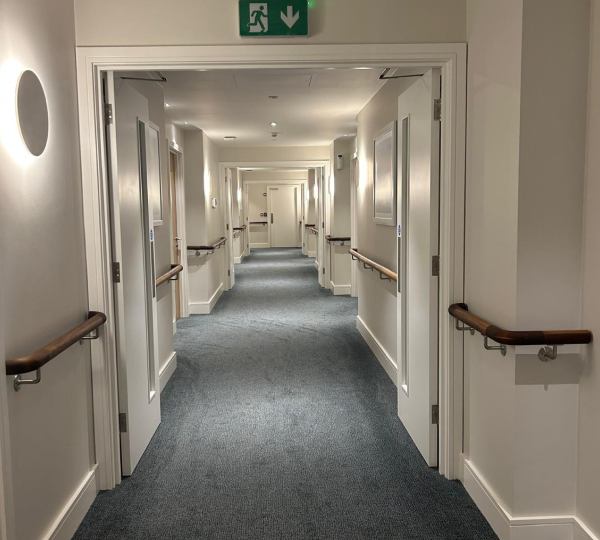
Emergency lighting is a system of battery-backed or independently powered luminaires designed to illuminate escape routes, exits, and key safety areas of a building in the event of a mains power failure. In the event of a fire, power cut, or other emergency, emergency lighting provides the illumination needed for occupants to safely evacuate the building and for emergency services to navigate within it.
Emergency lighting systems are governed in the UK by BS 5266, the British Standard for emergency lighting, and their installation, testing, and maintenance is also covered by the Regulatory Reform (Fire Safety) Order 2005 for commercial and public premises. Under the Fire Safety Order, the responsible person for a premises, typically the employer, building owner, or managing agent, has a legal duty to ensure that emergency routes and exits are indicated by signs and appropriately illuminated, and that the emergency lighting system is properly maintained and regularly tested.
There are different types of emergency luminaire, including maintained fittings that are always illuminated and non-maintained fittings that only illuminate when the mains supply fails. Emergency lighting systems must be tested on a regular basis, a monthly functional test and an annual full duration test as a minimum, and records of all testing must be kept.
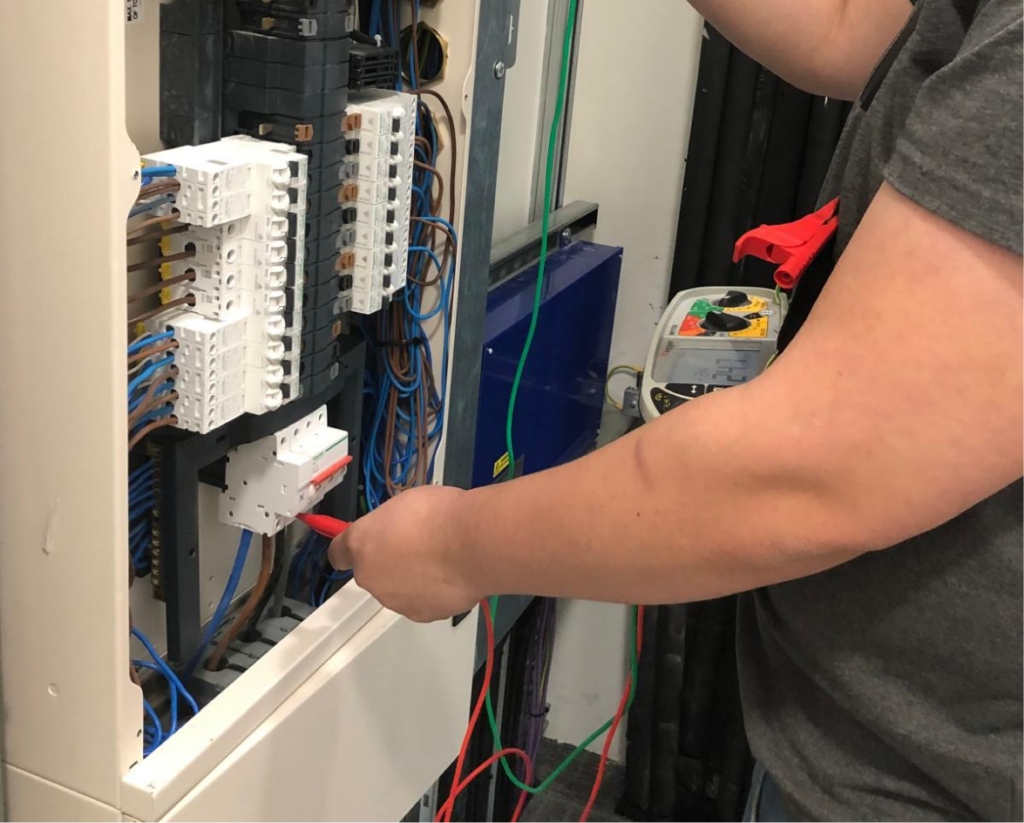
At LC Electrical Installations, we carry out emergency lighting testing and remedial works for all types of commercial, industrial, and applicable residential premises across London and the surrounding counties. All testing is carried out by our qualified, NICEIC-approved electricians and fully documented on completion.
Regular testing and maintenance of emergency lighting is a legal requirement under the Regulatory Reform (Fire Safety) Order 2005 and BS 5266. Professional testing by a qualified electrician, with proper documentation, is the accepted way of demonstrating that you are meeting your obligations as a responsible person.
Emergency lighting exists to protect lives. Testing ensures that the system will perform when it is needed most. A system that has not been properly tested and maintained may fail silently, leaving occupants without illumination during a real emergency.
Professional testing produces the written records that building owners and responsible persons need to demonstrate compliance during fire safety inspections, insurance assessments, and property transactions.
Regular testing identifies failing batteries, failed lamps, faulty drivers, and other issues before they result in a non-functional luminaire. Catching these issues early means they can be resolved with a simple repair rather than a more significant remediation.
Most commercial property insurers expect evidence of regular emergency lighting testing and maintenance. Documented testing records demonstrate due diligence and support your position in the event of a claim.
For landlords and building managers, ensuring emergency lighting is functional and tested is part of your duty of care to the people who live and work in your building.
Understanding what testing is required and how often is important for anyone responsible for a building with emergency lighting. The requirements under BS 5266 are clearly defined.
A brief functional test must be carried out every month to confirm that each emergency luminaire illuminates when the mains supply is simulated as failed. This test is typically short in duration, just long enough to confirm the luminaire activates correctly, to avoid fully discharging the batteries. The result of each monthly test must be recorded in the emergency lighting logbook.
Once a year, a full duration test must be carried out, during which the emergency lighting system is run on battery power for its full rated duration — typically one or three hours depending on the category of the system. This confirms that the batteries can sustain the system for the required duration. Any luminaires that fail the full duration test must be repaired or replaced. The results must be recorded in the emergency lighting logbook.
Where testing identifies failed or underperforming luminaires, battery replacements are required, or any other aspect of the system is not functioning correctly, remedial works must be carried out promptly to restore the system to full compliance. We carry out all required remedial works as part of our emergency lighting service.
A logbook of all emergency lighting tests and maintenance must be kept on site and be available for inspection. We provide full written documentation after every test and can supply or update the emergency lighting logbook as part of our service.
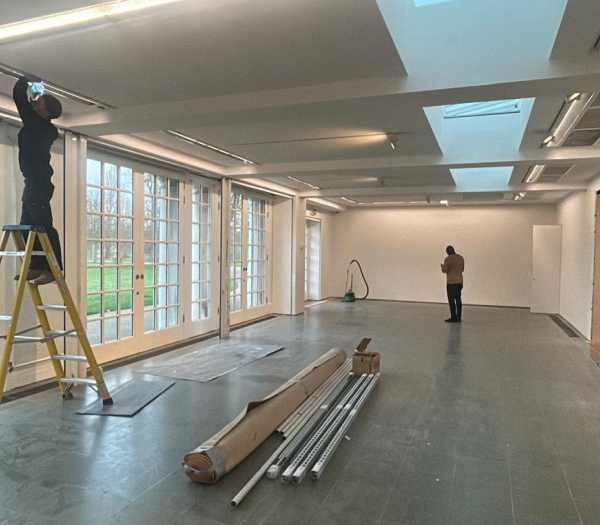
Emergency lighting is required in a wide range of building types, and the responsibility for ensuring it is tested and maintained falls on the building owner, employer, or responsible person. Here is an overview of the main property types where emergency lighting testing is required or strongly recommended.
Arranging emergency lighting testing is straightforward, but there are a few practical points worth bearing in mind.
For the annual full duration test, the emergency lighting system will need to run on battery power for its full rated duration - typically one to three hours. For commercial and industrial premises, this means the test is ideally carried out outside of normal operating hours to avoid disrupting the working day. We offer out-of-hours testing for clients where this is required, and this is something we discuss and agree at the booking stage.
It is also worth ensuring that the emergency lighting logbook is available and up to date before the test. If you do not have a logbook or are unsure of the testing history of your system, let us know when you get in touch and we will advise on the best approach.
Where the testing identifies failed or non-compliant luminaires, remedial works should be carried out promptly. A system with known faults that have not been addressed does not provide adequate protection and does not satisfy the legal obligations of the responsible person. We can carry out all required remedial works as part of the same visit where possible, or agree a follow-up visit for more extensive works.
At LC Electrical Installations, we make emergency lighting testing and compliance as straightforward as possible, handling the testing, documentation, and any required remedial works as a complete service.
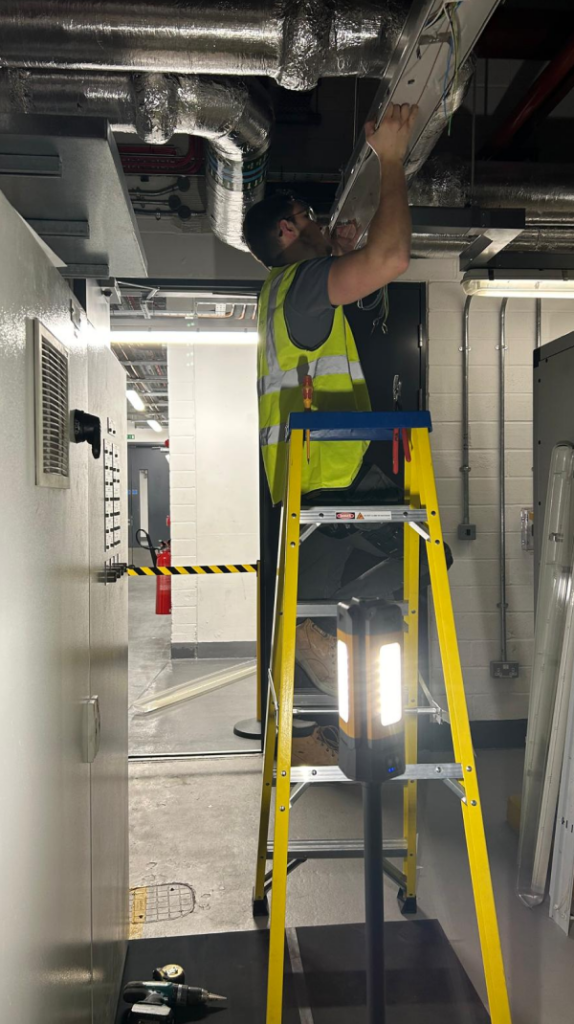
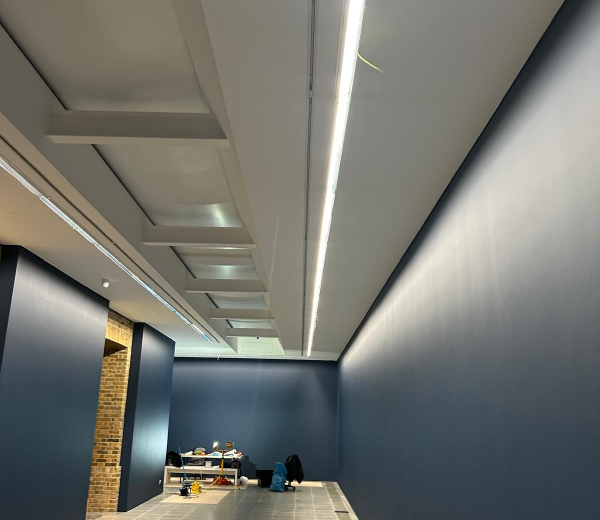
At LC Electrical Installations, we understand that emergency lighting testing needs to be thorough, properly documented, and carried out by people who know the relevant standards and requirements. A test that isn't properly conducted or recorded doesn't protect your occupants and doesn't satisfy your legal obligations.
Our electricians are qualified, NICEIC-approved, and experienced across all types of emergency lighting systems in commercial, industrial, and residential settings. We test systematically, record everything correctly, and provide documentation that is clear and complete. Where remedial works are required, we carry them out to a high standard using quality replacement components.
We work with commercial clients, industrial operators, landlords, managing agents, and facilities managers across London, Hertfordshire, Buckinghamshire, Bedfordshire, and Middlesex. Whether you need a one-off annual test or a regular testing programme across a portfolio of properties, LC Electrical Installations is ready to help.
1. Our Emergency Lighting Testing Process
2. Our Emergency Lighting Testing Process
3. Visual Inspection of All Emergency Luminaires & Exit Signs
4. Monthly Functional Test or Annual Full Duration Test Carried Out
5. All Luminaires Assessed & Results Recorded
6. Faults & Failed Luminaires Identified
7. Remedial Works Carried Out or Quoted Where Required
8. Full Written Report & Logbook Updated - Documentation Issued on Completion
Yes. Under the Regulatory Reform (Fire Safety) Order 2005 and BS 5266, the responsible person for a commercial or public premises has a legal duty to ensure that emergency lighting is properly maintained and regularly tested. For HMOs and blocks of flats, emergency lighting in common areas must also be maintained and tested under fire safety and housing legislation. Records of all testing must be kept on site.
A monthly functional test and an annual full duration test are required as a minimum under BS 5266. Monthly tests confirm that each luminaire activates correctly. The annual test runs the system on battery power for its full rated duration to confirm the batteries can sustain the system. All test results must be recorded in the emergency lighting logbook.
During a full duration test, the mains supply to the emergency lighting system is simulated as failed, causing all luminaires to switch to battery power. The system is then left running on battery power for its full rated duration — typically one or three hours. At the end of the test, each luminaire is checked to confirm it is still illuminated. Any luminaires that have failed during the test require repair or replacement.
For commercial and industrial premises, a full duration test carried out during the working day will leave the building running on emergency lighting only for up to three hours, which is generally impractical. We offer out-of-hours testing for clients where daytime testing would cause disruption, and this is something we agree at the booking stage.
Any luminaires that fail during testing are recorded and remedial works are required. Depending on the nature of the failure — a failed lamp, a failing battery, a faulty driver, or a completely failed fitting — we will carry out the repair on the same visit where possible or provide a clear quotation for the works required. Failed luminaires should not be left unaddressed.
Yes. If you do not have an emergency lighting logbook, or your existing logbook needs to be replaced, we can provide one and ensure it is correctly completed following the test. We update the logbook after every visit and provide a written copy of the test results for your records.
Yes. We carry out emergency lighting testing in HMOs, blocks of flats, care homes, and other residential buildings where emergency lighting in common areas is required. Landlords and managing agents responsible for these properties have an obligation to ensure testing and maintenance is carried out, and we make this straightforward.
The cost depends on the size of the premises and the number of luminaires to be tested. We provide competitive, transparent pricing with no hidden costs.
Whether you need a one-off annual emergency lighting test, a monthly testing programme, or remedial works to bring your emergency lighting system back into compliance, LC Electrical is ready to help. We cover commercial, industrial, and residential premises across London, Hertfordshire, Buckinghamshire, Bedfordshire, and Middlesex.
Our team is easy to deal with, thorough, and experienced across all types of emergency lighting systems and compliance requirements. Get in touch today and tell us what you need and we'll take it from there.